Quick Summary
- Google’s AI Overviews now appear on over 30% of queries; optimize your content structure to get cited, not just ranked.
- Core Web Vitals (LCP under 2.5 seconds, INP under 200ms) are confirmed ranking signals, not suggestions.
- E-E-A-T is evaluated at the page, author, and site level; surface real credentials, not just author bio boxes.
- Keyword research in 2026 starts with traffic potential and business value, not search volume alone.
- Internal linking is one of the highest-ROI on-page tactics most sites underuse, typically leaving 20-40% of link equity unflowed.
- Backlink quality now outweighs quantity by a wide margin; 10 links from topically relevant sites beat 100 from generic directories.
Most SEO articles written in 2024 are still ranking in 2026, and the problem is that you cannot tell. The advice inside them has not aged well. Google has shipped Core Web Vitals updates, expanded AI Overviews to more queries, tightened its E-E-A-T signals, and shifted how it evaluates content authority. If your SEO strategy is built on tactics from two years ago, you are not just behind. You are actively working against what Google rewards now.
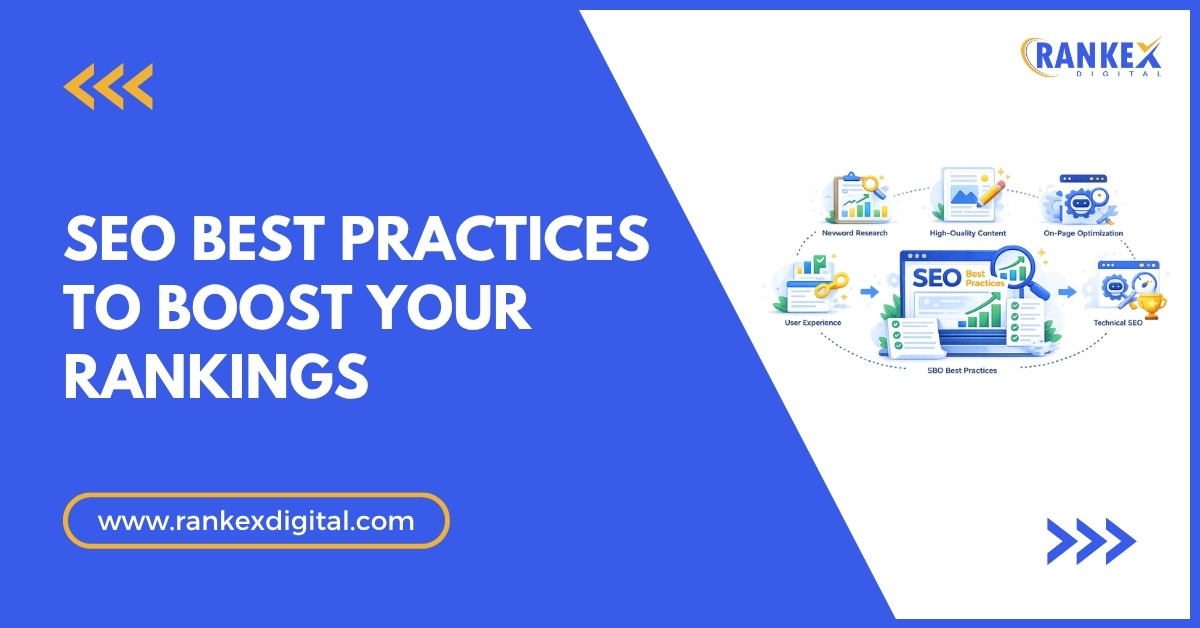
These 15 SEO best practices in 2026 are not about gaming the algorithm. They are about understanding what Google is trying to do and aligning your site with it.
In this blog
- 1. Technical SEO Fundamentals That Google Still Weighs Heavily
- 2. On-Page SEO Practices That Drive Real Rankings in 2026
- 3. Content Quality and E-E-A-T Signals Google Actually Measures
- 4. Link Building That Still Works (and What to Stop Doing)
- 5. AI Search and Google’s AI Overviews: What to Optimize For
- 6. UX, Core Web Vitals, and Search Experience Signals
- 7. Conclusion
- 8. Frequently Asked Questions
Technical SEO Fundamentals That Google Still Weighs Heavily
Technical SEO is not glamorous, but it is the foundation everything else sits on. A well-written article on a slow, poorly crawled site will not rank. Fix the foundation first.
Crawlability and Indexing
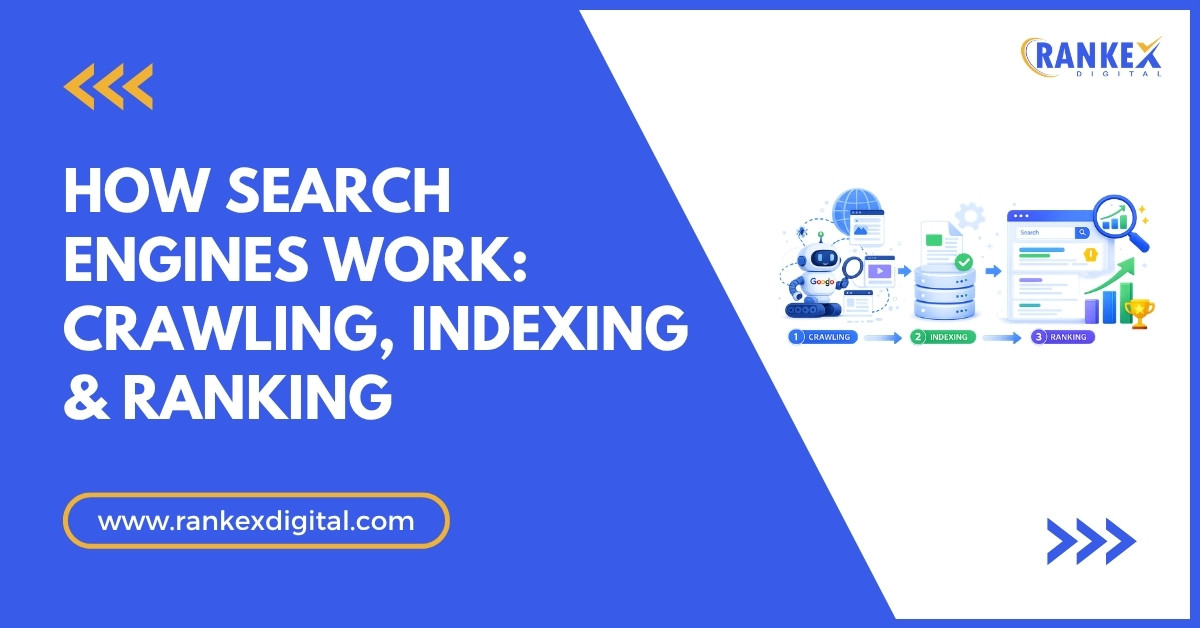
Open Google Search Console and go to Pages. Look at how many pages are indexed versus how many are submitted in your sitemap. A gap here usually points to crawl budget waste, duplicate content, or misconfigured canonicals. Use Screaming Frog’s crawl analysis to identify redirect chains (any chain longer than two hops is costing you link equity), broken internal links, and orphan pages that have no internal links pointing to them. Google discovers pages through links. Orphan pages often do not get crawled at all.
Set your XML sitemap to include only canonical, indexable URLs. If your sitemap lists 500 URLs and 200 of them return a 301 or are marked noindex, Google’s crawlers spend time on pages that contribute nothing.
Structured Data Markup
Schema markup does not directly boost rankings, but it gets you rich results, which boost click-through rates. For blogs and guides, implement Article schema. For service pages, use LocalBusiness or Service schema. For FAQ sections (every article should have one), add FAQPage schema. Google’s Rich Results Test will show you which schema is valid and which properties it is reading.
The highest-impact schema types in 2026 are: FAQPage, HowTo, Product, Review, and Article. Implement these on every relevant page type and validate using the Rich Results Test before publishing.
Site Architecture and URL Structure
Keep your site shallow. Target pages should be reachable within three clicks from the homepage. A flat architecture concentrates link equity and makes crawling more efficient. URLs should be lowercase, hyphen-separated, and contain the primary keyword without stop words. /seo-best-practices beats /blog/post?id=1142.
On-Page SEO Practices That Drive Real Rankings in 2026
On-page SEO is where most sites have the most untapped opportunity. The changes Google rewards in 2026 are subtle but important.
Keyword Research That Goes Beyond Volume
Search volume is a starting point, not a destination. In Ahrefs Keywords Explorer, filter by Keyword Difficulty under 30 and sort by Traffic Potential (not volume) to help improve website ranking strategically. Traffic Potential shows the total traffic a top-ranking page on that keyword receives, including all the long-tail variants. A keyword with 1,000 monthly searches might have a Traffic Potential of 8,000 because the top-ranking page captures dozens of related terms.
Segment your keyword research by search intent: informational (users want to learn), navigational (users want to find a specific site), commercial (users are comparing options), and transactional (users are ready to buy). Match your content type to intent. A transactional keyword needs a product or service page, not a blog post. Sending commercial-intent keywords to a guide is a structural mismatch that Google will penalise with lower rankings.
Title Tags and Meta Descriptions
Title tags under 60 characters rank with lower truncation risk. Lead with the primary keyword whenever natural. Adding a number or year to the title increases CTR meaningfully: “15 SEO Best Practices to Boost Your Rankings in 2026” outperforms a generic “SEO Best Practices Guide” because it signals recency and specificity.
Meta descriptions do not directly influence rankings, but they control click-through rate, which does influence rankings over time. Write meta descriptions that complete the thought the title starts. If the title asks a question, answer it briefly in the meta description. Use 140 to 160 characters and include your primary keyword naturally.
Header Hierarchy
Use one H1 per page, always. Structure H2s around the primary subtopics the user needs to understand. Use H3s for specifics within each H2. This is not just organizational. Google reads your heading structure to understand what topics the page covers and how they relate. A flat page with only H2s signals low content depth. A page with H2s that contain well-developed H3 clusters signals topical depth.
Image Optimization
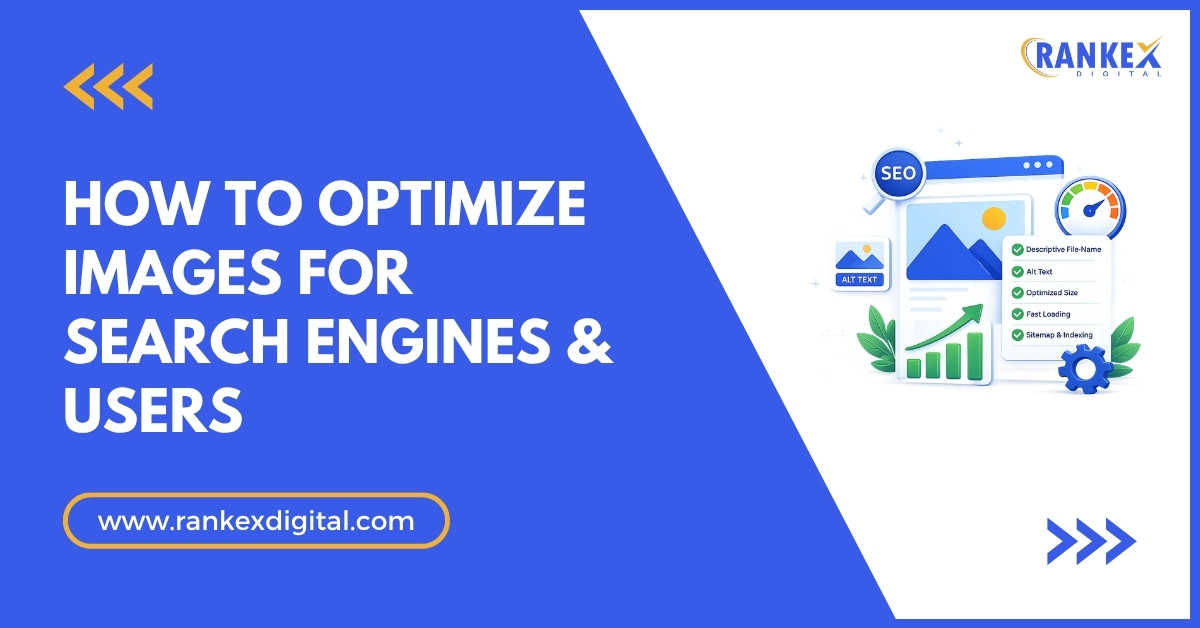
Every image needs a descriptive file name (not image001.jpg) and alt text that describes the image accurately. For informational articles, prioritize WebP format, which is smaller than JPEG and PNG without visible quality loss. Use lazy loading on images below the fold to improve LCP. Tools like Squoosh can compress images by 60 to 80% without visual degradation.
Content Quality and E-E-A-T Signals Google Actually Measures
E-E-A-T stands for Experience, Expertise, Authoritativeness, and Trustworthiness. Google’s Quality Raters use it to evaluate content, and while it is not a direct algorithmic signal, it shapes what Google’s systems reward over time. Sites that demonstrate real E-E-A-T outperform those that do not across nearly every content category, particularly YMYL (Your Money, Your Life) topics.
Experience Signals
Experience is the newest addition to the E-E-A-T framework. Google wants to see evidence that the person writing has actually done the thing they are writing about. For an SEO guide, that means: referencing specific tools and specific outcomes from using them, describing mistakes made in practice, and showing familiarity with nuance that only comes from doing the work.
Do not write “use keyword research tools to find low-competition keywords.” Write “in Ahrefs Keywords Explorer, set the KD filter to 0 to 20, sort by Traffic Potential descending, and flag any keyword where the top-ranking page has a Domain Rating under 40. These are your entry points.” The specificity signals firsthand knowledge.
Author Credibility
Every article should have an author byline linked to a detailed author page. The author page should list real credentials: past publications, LinkedIn profile, Twitter/X presence, specific expertise, and any verifiable achievements. Google’s crawlers connect author entities across the web. An author who has published on recognized platforms builds authority that benefits every article they write.
If you are a business publishing content, list the team member responsible for each piece. Anonymous content performs systematically worse on expertise-dependent topics.
Content Freshness
Freshness is a ranking factor for queries where users expect up-to-date answers. This includes “best [product/tool] in 2026” queries, news and event-related topics, and how-to content where best practices change. For evergreen content, audit your top-traffic articles every six months. Update statistics, remove outdated references, add new sections for developments since publication, and update the publish date only after making substantive changes. Updating the date on unchanged content does not work. Google compares page content across crawls.
Topical Authority
Topical authority means covering a subject so completely across your site that Google sees you as a go-to source. Build content clusters: a pillar page covering the broad topic (e.g., “What is SEO”) linked to supporting pages covering specific subtopics (technical SEO, link building, on-page SEO, local SEO). Each supporting page should link back to the pillar page and to other related supporting pages. Ahrefs’ Site Explorer shows which topics you rank for. Identify gaps where competitors rank on subtopics you have not covered.
Link Building That Still Works (and What to Stop Doing)
Backlinks remain one of Google’s top three ranking signals. But the definition of a good backlink has changed significantly.
What Google Rewards
Links from topically relevant sites carry dramatically more weight than links from high-DA but unrelated sites. A link from a respected marketing blog pointing to your SEO guide is worth more than a link from a generic news aggregator with a Domain Authority of 80. Relevance is the multiplier.
The best link-building strategies in 2026:
Digital PR and Original Research: Publish original data studies, surveys, or proprietary analyses. Journalists and bloggers link to original data constantly. A single well-promoted research piece can earn 50 to 100 editorial links that no outreach campaign could replicate. Use tools like Surfer SEO or Exploding Topics to find data gaps in your industry worth researching.
Skyscraper Link Reclamation: Use Ahrefs to find your competitors’ top-linked pages. Then find the specific sites linking to them. Create a better version of the same content, reach out to those linkers with a specific, brief pitch explaining what makes your version more useful. Conversion rates on this approach run between 5 and 15%, which is strong for outreach.
Strategic Guest Posting: Guest posting on topically relevant, editorially strict publications still works. The key word is “editorially strict.” Sites that accept any guest post pass almost no authority. Prioritize publications where content is reviewed, where the editorial bar is visible, and where the audience genuinely overlaps with your target customer.
What to Stop Doing
Stop acquiring links from private blog networks (PBNs). Google’s spam systems have become markedly better at identifying unnatural link patterns. Stop buying links from link sellers who work across dozens of industries with no topical coherence. Stop using link exchanges at scale. A handful of natural reciprocal links between genuinely related sites is fine. A pattern of hundreds of them is a manipulation signal.
AI Search and Google’s AI Overviews: What to Optimize For
Google’s AI Overviews now appear on a significant portion of informational queries. This fundamentally changes the click-through rate landscape for top-of-funnel content. Pages cited in AI Overviews receive brand exposure even when users do not click through. Pages not cited are effectively invisible on those queries.
How Google Chooses AI Overview Sources
Google pulls AI Overview citations from pages ranking in the top 10, but not exclusively from position 1. The selection favors pages that have clear heading structure, answer-first paragraph writing, and concise standalone sentences at the start of each section. Think of it as writing for someone who will only read the first sentence of each paragraph. If that sentence does not contain a complete answer, you are not getting cited.
Optimization Tactics
Start every H2 section with a direct, one-sentence answer to the implied question of that heading. This is the AEO (Answer Engine Optimization) principle. Follow the direct answer with detail, examples, and expansion. Do not bury the answer in the middle of a paragraph.
Use FAQ sections at the end of every article with a minimum of 8 to 10 questions. Write FAQ answers that are 2 to 4 sentences long, factually dense, and self-contained. These are the most extracted elements from articles for AI Overviews. Implement FAQPage schema on every FAQ section.
For product and service pages, focus on structured content: comparison tables, feature lists, pros and cons sections. These formats are highly extractable and tend to be cited in AI Overviews for commercial-intent queries.
AI Search Engines Beyond Google
Perplexity, ChatGPT with web browsing, and Gemini are pulling citations from the same pool as Google. The optimization principles are identical: factual density, entity specificity, answer-first structure, and trustworthy authorship signals. A page optimized well for Google AI Overviews is simultaneously optimized for Perplexity citations.
UX, Core Web Vitals, and Search Experience Signals
Google confirmed Core Web Vitals as ranking signals starting in 2021, and they have become more determinative as competition on other factors has increased. In 2026, they are a baseline requirement, not a differentiator.
The Three Metrics That Matter
Largest Contentful Paint (LCP) measures loading speed for the largest visible element. Target: under 2.5 seconds. The most common LCP failure is an unoptimized hero image. Convert hero images to WebP, preload them using <link rel="preload">, and host them on a CDN.
Interaction to Next Paint (INP) replaced First Input Delay in 2024 and measures responsiveness to every interaction on the page, not just the first click. Target: under 200ms. Heavy JavaScript, third-party scripts, and render-blocking resources are the primary causes of high INP. Audit your page’s JavaScript with Chrome DevTools’ Performance panel. Any script adding more than 50ms of main-thread blocking time is a candidate for deferral or removal.
Cumulative Layout Shift (CLS) measures visual stability. A page where elements jump around as it loads has high CLS. Target: under 0.1. The fix is always to reserve space for dynamic elements before they load. Give images explicit width and height attributes. Reserve space for ad units. Avoid inserting content above existing content after the page has loaded.
Mobile-First Indexing
Google has been mobile-first since 2020. Every new site launched after 2019 is indexed primarily based on its mobile version. Check your mobile experience using Google Search Console’s Mobile Usability report. Common failures: text too small to read without zooming, clickable elements too close together, and content wider than the screen. These are not cosmetic issues. They suppress rankings on mobile, which represents over 60% of search traffic.
Page Experience and Engagement Signals
Google tracks behavioral signals as part of search quality evaluation: how long users stay on a page, whether they click back to search results immediately (a “pogostick” click indicating unsatisfied intent), and whether they interact with the content. These signals do not directly feed into the ranking algorithm the way backlinks do, but they influence the quality assessments that shape which pages Google trusts over time.
Write for engagement. Use subheadings to break long sections. Use visuals (charts, annotated screenshots, comparison tables) where they reduce the reading load. Add a table of contents for articles over 1,500 words. Make your content skimmable so users who are scanning can find what they need without bouncing.
Conclusion
SEO in 2026 is not about tricks. It is about alignment. Google has one job: deliver the most useful result for any given search. Your job is to build pages that are genuinely the most useful result, and then make sure Google can read, trust, and rank them.
The practices in this guide are not a checklist you complete once. Technical audits should run quarterly. Content should be updated as information changes. Link building is ongoing. Core Web Vitals need monitoring as your site grows and as new scripts are added.
If you want to prioritize: fix technical crawlability issues first, because they block everything else. Then optimize your top-traffic pages for E-E-A-T and AI Overview citation. Then build links to the pages that are already ranking on page two, where a small boost has the most impact.
If you need help identifying which pages to prioritize or building a link profile that actually moves rankings, Rankex Digital’s SEO team works through exactly this kind of audit-first process.
Frequently Asked Questions
What are the most important SEO best practices in 2026?
The highest-impact practices are: fixing technical crawlability issues, optimizing for Core Web Vitals (LCP under 2.5s, INP under 200ms), building topical authority through content clusters, earning topically relevant backlinks, and structuring content to appear in Google’s AI Overviews. These five areas account for the majority of ranking movement on competitive keywords.
How long does SEO take to show results?
Most sites see measurable ranking improvements within three to six months of implementing technical fixes and publishing optimized content. Competitive keywords in high-authority niches can take twelve months or longer. New domains targeting low-competition keywords with strong content can see results in six to eight weeks.
Does keyword density still matter for SEO?
Keyword density as a fixed percentage target is outdated. Google evaluates keyword usage contextually. Aim for natural inclusion of your primary keyword in the title, first 100 words, at least two H2 headings, and the conclusion. Use secondary keywords where they appear naturally. Forcing keywords into unnatural positions can trigger spam signals.
What is E-E-A-T and how do I improve it?
E-E-A-T stands for Experience, Expertise, Authoritativeness, and Trustworthiness. To improve it: add author bylines with real credentials, link to an author page with verifiable background information, publish original research and data, earn backlinks from authoritative sites in your industry, and ensure your site has a visible About page, privacy policy, and contact information.
Is link building still important in 2026?
Yes. Backlinks remain one of Google’s top three ranking signals. The shift is toward quality and topical relevance over volume. Ten links from relevant, authoritative sites in your niche outperform 100 links from unrelated high-DA sites. Focus on digital PR, strategic guest posting, and original research that earns editorial links.
What is Google’s AI Overview and how do I get featured in it?
Google’s AI Overview is an AI-generated summary that appears at the top of search results for informational queries. Google pulls sources from pages ranking in the top 10 for the query. To increase your chances of being cited: start each H2 section with a direct one-sentence answer, use clear heading hierarchy, implement FAQPage schema, and write factually dense content that AI systems can parse and cite.
How does mobile-first indexing affect SEO?
Google indexes and ranks pages based primarily on their mobile version. If your mobile site has missing content, slower load times, or poor usability compared to desktop, your rankings will reflect the mobile experience, not the desktop one. Check your mobile performance using Google Search Console’s Mobile Usability report and PageSpeed Insights.
What is topical authority and how do I build it?
Topical authority means covering a subject comprehensively enough that Google treats your site as a trusted source on that topic. Build it by creating content clusters: a broad pillar page linking to detailed supporting pages on every major subtopic. An SEO site that covers keyword research, technical SEO, link building, local SEO, and on-page SEO in depth will outrank a site that only covers one of these areas, even if the single article is better written.
What Core Web Vitals score should I target?
Google defines “good” scores as: LCP under 2.5 seconds, INP under 200ms, and CLS under 0.1. Use PageSpeed Insights for field data from real users and Chrome DevTools for lab-based diagnostics. Prioritize fixing LCP first (it has the broadest impact), then INP, then CLS.
Does updating old content improve SEO? Yes, but only if the update is substantive. Changing the publish date without updating the content does not help. Adding new sections, replacing outdated statistics with current data, improving structural clarity, and expanding thin H2 sections all signal genuine freshness to Google. Schedule content audits every six months for your top-traffic articles.
What is the difference between on-page and off-page SEO?
On-page SEO covers everything you control directly on the page: title tags, headings, content quality, keyword usage, structured data, internal links, and page speed. Off-page SEO covers signals that come from outside the page, primarily backlinks, brand mentions, and social proof. Both matter. On-page SEO sets the ceiling for what a page can rank for. Off-page SEO determines whether it reaches that ceiling.
How many words should an SEO article be?
Word count should match what the topic requires, not hit an arbitrary number. Google’s ranking systems evaluate depth and usefulness, not length. For competitive informational keywords, top-ranking articles typically fall between 2,000 and 4,000 words. For simple queries, 700 to 1,000 words may be more appropriate. The test: after reading your article, would a user have any follow-up questions the article did not answer? If yes, expand it.
Is social media a Google ranking factor?
Social media signals (likes, shares, followers) are not direct ranking factors in Google’s algorithm. However, social media drives referral traffic, exposes content to audiences who may link to it, and builds brand search volume, which is an indirect trust signal. An active social presence amplifies content reach in ways that ultimately support SEO outcomes.
What tools should I use for SEO in 2026?
The core stack: Ahrefs or Semrush for keyword research, competitor analysis, and backlink tracking; Google Search Console for indexing data and search performance; Screaming Frog for technical site audits; PageSpeed Insights for Core Web Vitals; Surfer SEO or Clearscope for on-page optimization scoring. Google Search Console is free and should be the first tool every site owner sets up.
How do I find low-competition keywords to target?
In Ahrefs Keywords Explorer, set the Keyword Difficulty filter to 0-25, enter your broad topic, and sort results by Traffic Potential descending. Look for keywords where the top-ranking pages have a Domain Rating under 40, which suggests the barrier to entry is low. Also check the SERP for that keyword: if results include forum posts, Reddit threads, or thin content, the topic is underserved and represents a real opportunity.